Thinking Outside The Box

Way back in 2019 I started trying to control how I use digital technology by writing this entry in my journal: “Don’t use your phone for the first 30 minutes after waking up.” Five years on, I have created an elaborate system to counteract a technology that is so compelling, so addictive, and so dominant in how we live our day-to-day lives that every part of our lives is impacted by it.
Why Journaling (Mostly) Does Not Work
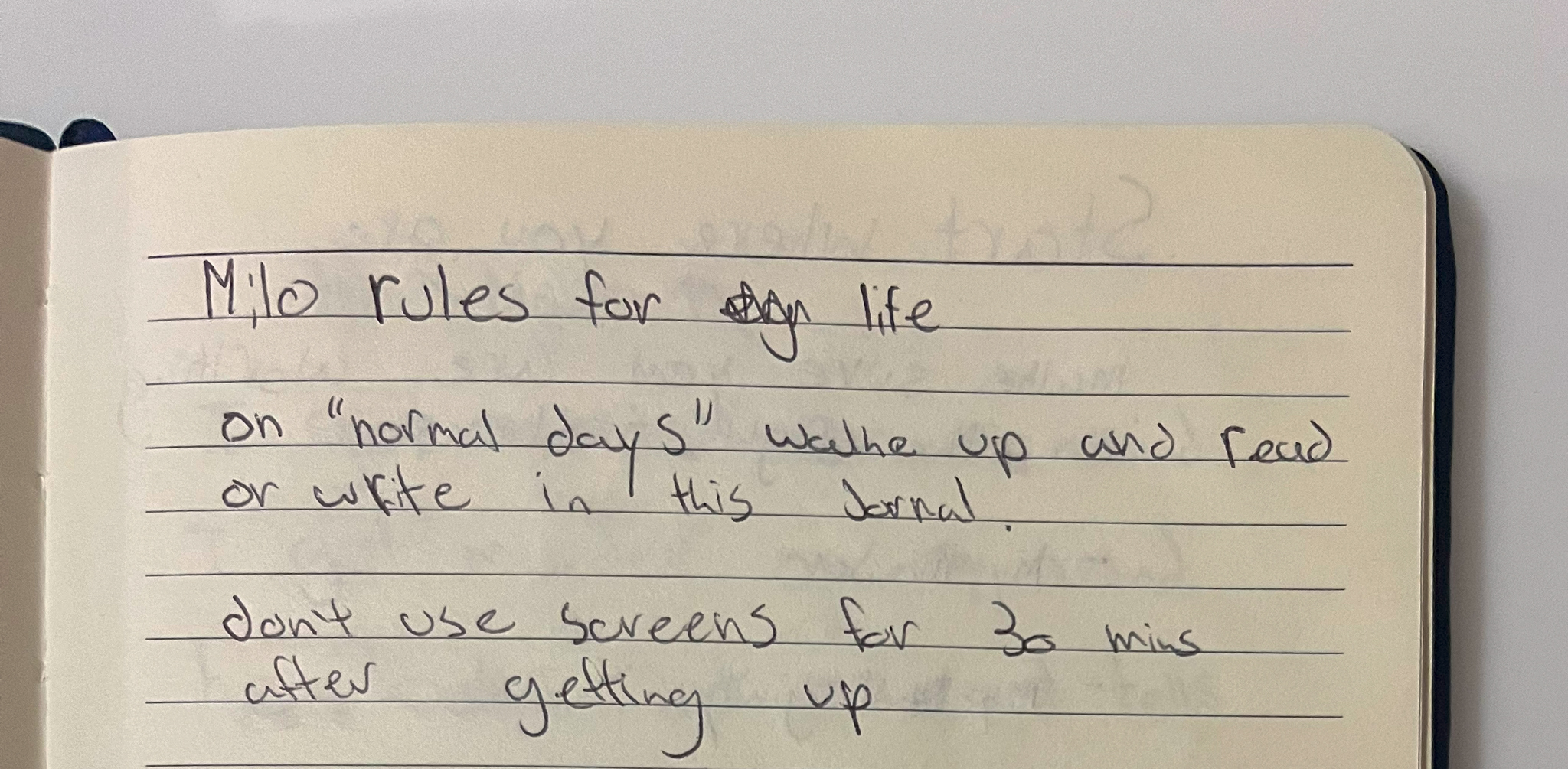 The first of many times I wrote some version of “Don’t use the phone or computer right after waking up.”
Let me be clear, journaling can be useful for a variety of things, but it does not work to control screen timey. This photo is ripped from the first few pages of my first journal, and I have rewritten this rule at least 50 times in the journals I’ve had since without ever made a lasting difference. The problem is my journal can’t actually tell me to put my phone down.
Traps V.S Good ideas
 I used Velcro to attach my phone to the front of my fifth journal.
My journal could not make me put my phone down, but maybe my phone could make me pick the journal up? Like many of my early attempts to connect a method of control with a device that has a powerful hold over me, this system eventually failed because it took too long to set up, while also being too easy to take apart. The full chapter will outline the many techniques and methods I experimented with and my review of what worked and what did not.
My First Box
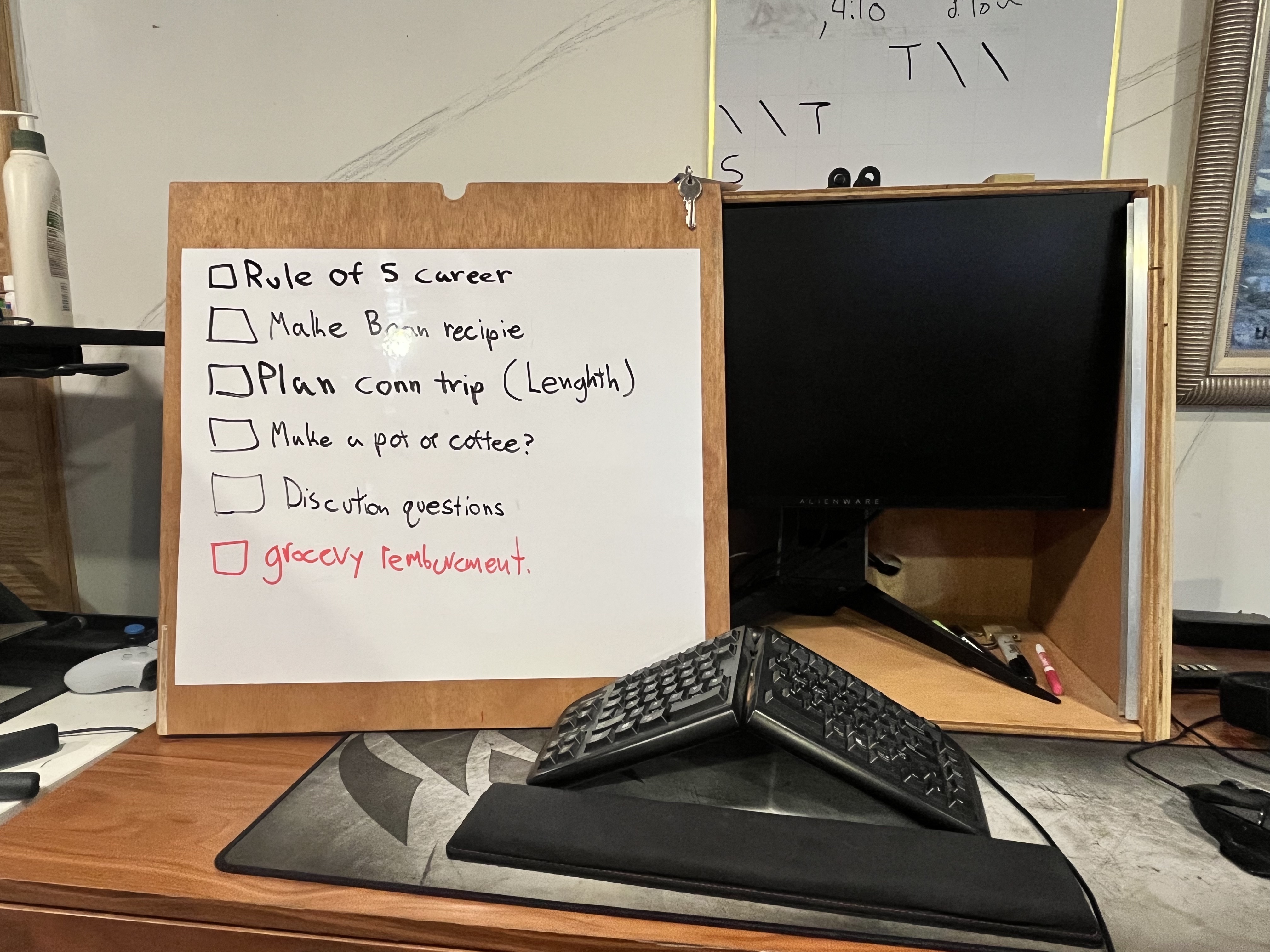 A homemade wooden box anchors the single most effective system for controlling my screen time I have ever used
The box works primarily because it is social, with a friend holding the key. But it also serves as a physical barrier and reminder that I want to be careful of how I use my screen time.